Advanced lead-acid battery technology has been developed to meet the significantly increased requirements for emerging start-stop/hybrid electric vehicles and stationary energy-storage application, which include high dynamic charge acceptance (DCA) and long cycle life during micro-cycling at partial state of charge.
The main feature of this technology is to use a conductive carbon enhanced negative electrode.
How Carbon Black Enhances Lead-Acid Battery Performance
High-speed printing
Optimized conductivity enables quicker electron flow, helping batteries recharge faster and more efficiently.
Idle Start and Stop Functionality
Supports reliable power delivery during frequent engine restarts without compromising battery health.
Long-Life
Enhanced charge acceptance and reduced sulfation extend the number of charge–discharge cycles.
High Endurance For Multiple Tasks
Delivers stable performance under demanding electrical loads and repeated deep-discharge conditions.
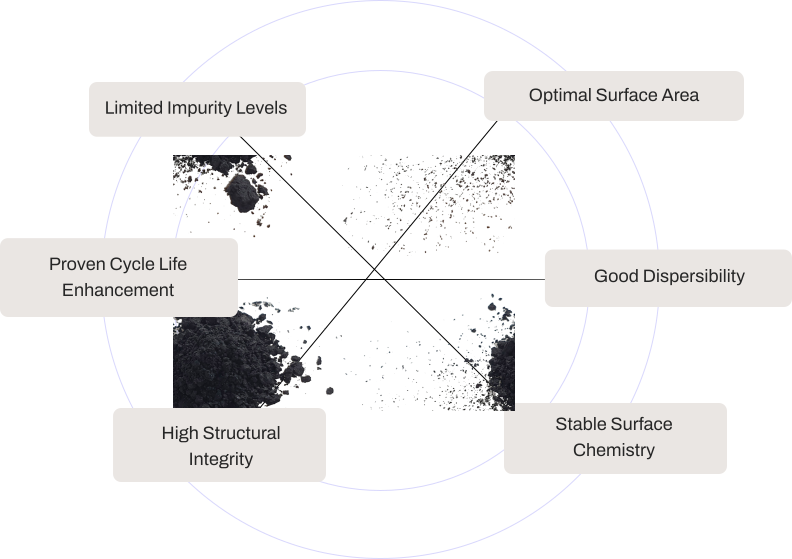
Key carbon black requirements
Optimal Surface Area
Good Dispersibility
Stable Surface Chemistry
High Structural Integrity
Proven Cycle Life Enhancement
Limited Impurity Levels
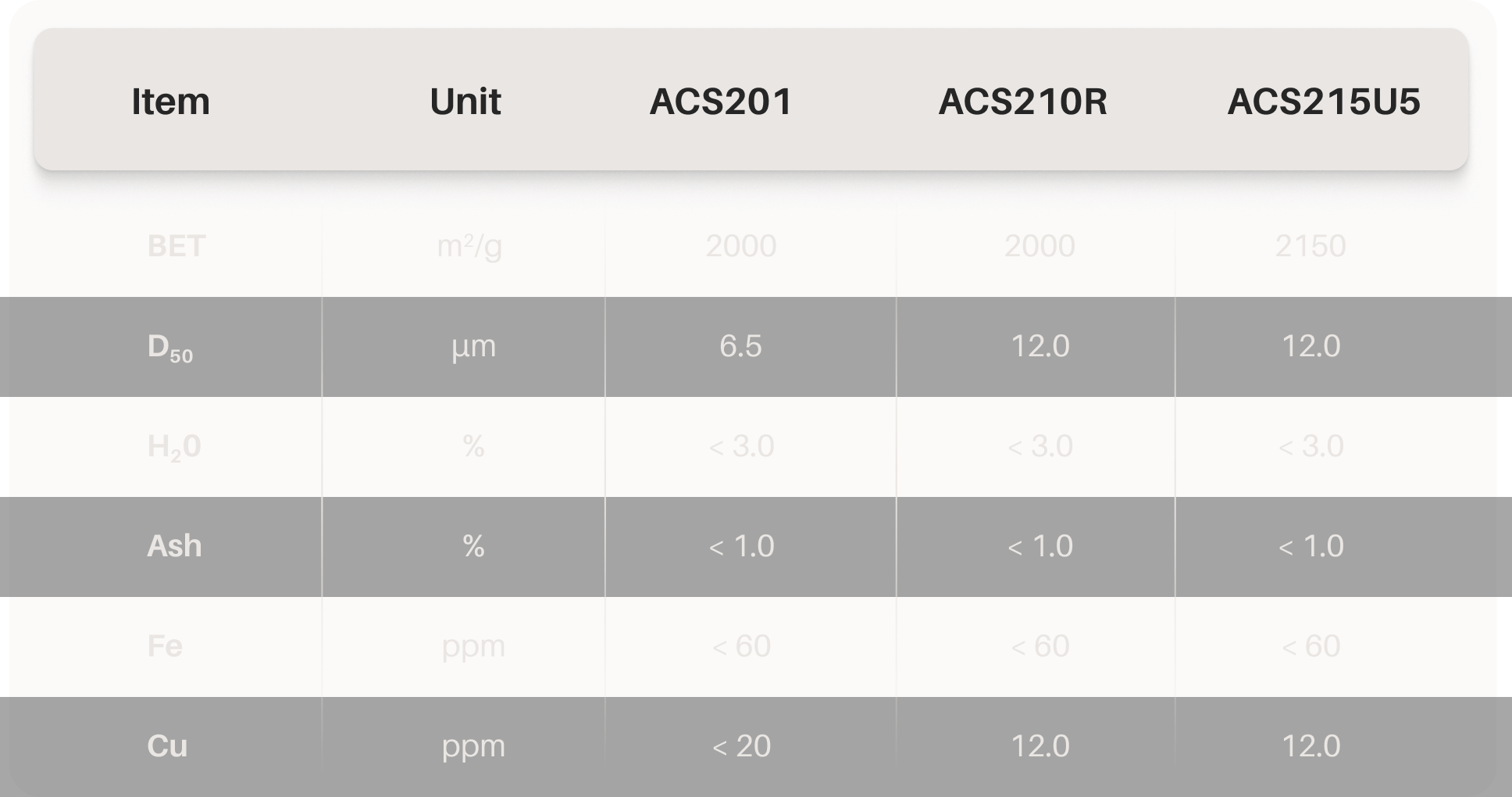
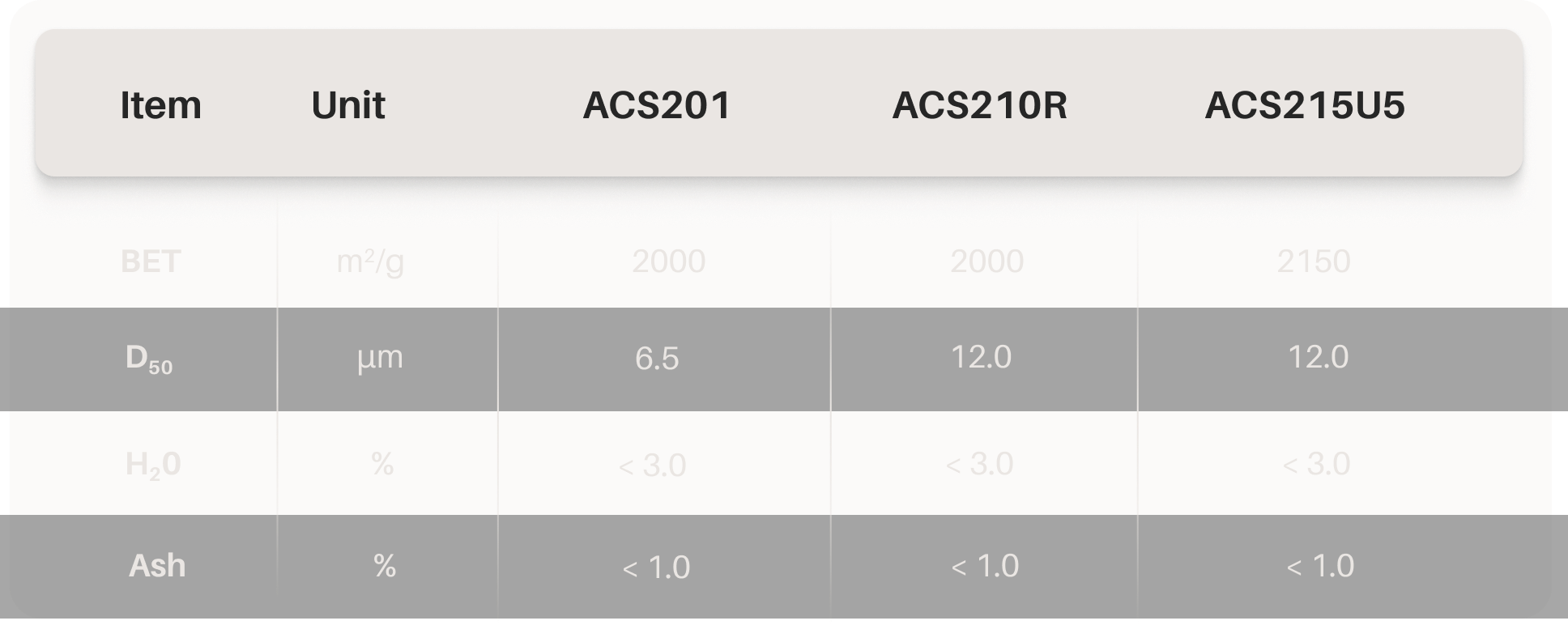
We produce advanced carbon for advanced lead acid batteries using Coal Tar Pitch as raw materials.
ACS in Lead-acid battery can increase active surface area of negative electrode for more utilization rate, and additional nucleation sites for small PbSO4 deposition, and inner conductive network for good charging acceptance.
ACS For
Lead Acid Battery
The performance of carbon black in lead-acid batteries is driven by its structure, surface properties, and purity, which together determine conductivity, charge acceptance, and long-term stability.